Patra Chaat is a vegetarian Indian starter that takes patra, a western Indian snack of colocasia leaves, and serves it chaat-style with yoghurt, sweet and sour chutneys and crunchy toppings. At Pure Indian Cooking, our Patra Chaat (£11) combines colocasia leaves with yoghurt, date and tamarind chutney, pomegranate, onion, tomato and sev, and it is one of the dishes critics single out most often.
At a glance
- À la carte: Patra Chaat, £11
- Also a starter choice on the early dinner (2 courses £27 / 3 courses £33) and weekend set lunch (£21 / £25)
- The third course of Chef Shilpa's £68 tasting menu
- Vegetarian; allergens listed on the menu: dairy and sesame
What is patra?
Patra is a much-loved snack from Gujarat and Maharashtra in western India. In Maharashtra it is often called alu vadi, from the Marathi word for the leaf. The leaves come from the colocasia plant, better known in English as taro, whose large, heart-shaped leaves are tender and earthy when cooked.
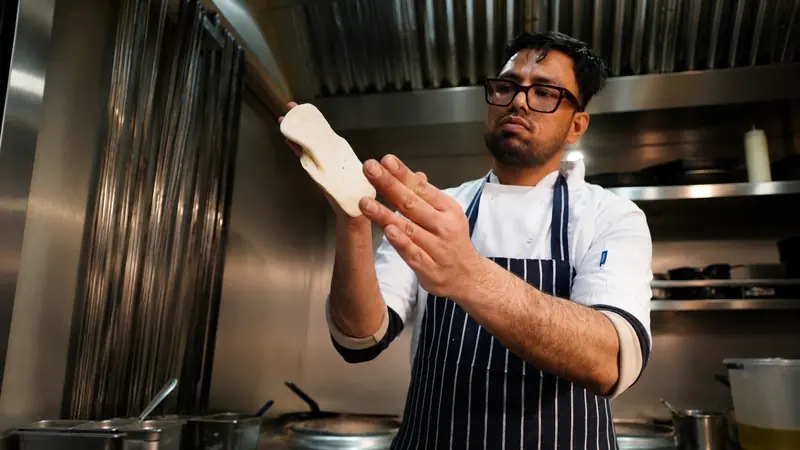
The traditional method goes roughly like this. The leaves are spread with a spiced paste, usually made from gram flour and often sharpened with tamarind and softened with jaggery. They are stacked, rolled tightly into a log, steamed, then sliced into spirals. Many households finish the slices with a tempering of mustard seeds and sesame, or shallow-fry them until crisp at the edges.
Colocasia leaves are always cooked before eating, since raw leaves can irritate the mouth and throat. Steaming is what turns them soft and savoury.
Gujarati and Maharashtrian styles
Recipes vary from family to family. Gujarati patra is often described as a little sweeter and tangier, while Maharashtrian alu vadi can lean more savoury and is frequently fried for extra crunch. Both are eaten as tea-time snacks, festival food and part of a larger meal.
What makes it a chaat?
Chaat is the name for a whole family of Indian street snacks built on contrast: crisp against soft, sweet against sour, cool yoghurt against warm spice. The name is commonly linked to the Hindi word for licking, as in licking your fingers. Papadi chaat, dahi puri and pani puri are classic examples, and all three are on our à la carte menu at £9 each.
Turning patra into a chaat brings those two traditions together. The leaf rolls supply the earthy, savoury base. The chaat toppings bring brightness and texture.
How is our Patra Chaat served?
On our menu, the dish is described as colocasia leaves served with yoghurt, date and tamarind chutney, pomegranate, onion, tomato and sev. Here is what each element brings to the plate:
| Element | What it adds |
|---|---|
| Colocasia leaves | An earthy, savoury base with a gentle chew |
| Yoghurt | Coolness and creaminess to balance the spice |
| Date and tamarind chutney | Sweet and sour depth, the classic chaat note |
| Pomegranate | Juicy bursts of sharp sweetness and colour |
| Onion and tomato | Freshness and a little bite |
| Sev | Fine, crunchy gram flour noodles for texture |
The result tastes familiar if you know chaat and surprising if you don't. It is a good example of the kitchen's approach, rooted in Indian tradition and presented with a modern hand. Chef Shilpa trained with the Taj Group and later in classical French kitchens; you can read more in our story.
Why do critics rate our Patra Chaat?
Patra Chaat is one of the dishes reviewers mention first. The Infatuation highlighted it alongside the Methi Malai Chicken Tikka and Dal Makhani in its review. The Resident, in a review headlined "A whole new spin on Indian fine-dining", also praised the patra chaat, along with the halibut fish curry, lamb sukke and bhindi anardana.
It is also the one starter that appears on all four of our menus: à la carte, early dinner, weekend set lunch and the tasting menu. That tells you how central it is to the way Chef Shilpa likes to open a meal.
Where can you try Patra Chaat?
- À la carte (£11): available at every service, as a starter or for the table to share.
- Early dinner: one of the starter choices, every day from 5.30pm to 6.30pm. See the early dinner menu.
- Weekend set lunch: a starter option on Saturday and Sunday. See the set lunch menu.
- Tasting menu (£68): the third course, after Pani Puri Shots and Crispy Buttermilk Chicken. Our guide to the Indian tasting menu walks through the full evening.
What goes well with Patra Chaat?
Because it is tangy and lightly sweet, Patra Chaat pairs best with drinks that are crisp rather than heavy. A glass of Grover's Sauvignon Blanc from Karnataka (£10) or the Pasqua Prosecco (£11) both work well. Non-drinkers can try the Kokum Sharbat (£7), a west-coast drink that shares the dish's sour-sweet character.
On the plate, follow it with something from the clay oven, such as the Methi Malai Chicken Tikka (£12) or Malabari Paneer Tikka (£11), and then a richer main. For a vegetarian meal, Dal Makhani (£11) and Bhindi Anardana (£11) make a good pair. If you want a coastal main next, our piece on the Mangalorean chicken curry is a natural follow-on, and the first-visit guide suggests a full order for two.
Come and try it
Patra Chaat is on the à la carte at every service. Reserve a table for dinner or weekend lunch, or check our opening hours and directions before you set off. We are a short walk from Putney Bridge station.
Frequently asked questions
What is Patra Chaat made of?
Our Patra Chaat is colocasia leaves served with yoghurt, date and tamarind chutney, pomegranate, onion, tomato and sev. Traditional patra is made by rolling colocasia leaves with a spiced paste, steaming and slicing them.
Is Patra Chaat vegetarian?
Yes, it is vegetarian. The menu lists dairy and sesame as allergens, so please tell our team about any allergies when you order.
Is Patra Chaat spicy?
It is not marked as spicy on our menu. The flavour is mainly tangy, sweet and savoury, balanced by cool yoghurt.
How much is Patra Chaat?
It is £11 on the à la carte menu. It is also included as a choice on the early dinner and weekend set lunch, and as a course on the £68 tasting menu.
Book a table at Pure Indian Cooking
67 Fulham High Street, London SW6 3JJ · 020 7736 2521