Vegan Indian food in London is easier to find than most cuisines, because Indian cooking has always built meals around lentils, vegetables, rice and spice. The catch is dairy: ghee, cream, butter, yoghurt and paneer turn up in many dishes, sometimes where you would not expect them. At Pure Indian Cooking in Fulham we have several dishes that can be a good starting point, but please always ask our team to confirm which dishes can be prepared vegan on the day.
At a glance
- Vegan and other dietary options available; allergens are marked on every menu
- Common hidden dairy in Indian food: ghee, cream, butter, yoghurt, paneer
- Always tell our team you are vegan when you book and when you order
- 67 Fulham High Street, SW6 3JJ, close to Putney Bridge station
Why does Indian cuisine suit plant-based eating?
A large share of India's population is vegetarian, and many regional kitchens developed rich, satisfying food without meat. Lentils and chickpeas provide protein and body. Vegetables such as aubergine, okra, spinach and potato are cooked with real care rather than served as a side. And spice does the heavy lifting: cumin, mustard seed, curry leaves, ginger and chilli give depth that other cuisines might get from stock or butter.
Coconut is another ally. Along India's southern and western coasts, coconut milk and grated coconut are everyday ingredients, which means many coastal dishes are built on a base that is naturally free of dairy.
Where does dairy hide in Indian food?
This is the part that catches people out. Indian food is plant-forward, but it is not automatically vegan. Watch for these:
- Ghee. Clarified butter is a traditional cooking fat, used for frying spices, finishing dals and making sweets.
- Butter and cream. Common in North Indian restaurant dishes such as dal makhani and butter chicken.
- Yoghurt. Used in marinades for the tandoor, in sauces, and in raita.
- Paneer. A fresh cheese made from milk.
- Breads. Naan is often made with milk or yoghurt and brushed with butter.
- The tadka. The final tempering of spices may be done in oil or ghee, depending on the kitchen and the dish.
Honey is less common in savoury Indian cooking, but it is worth asking about with desserts and drinks. The simplest rule is to tell your server you are vegan, rather than just "dairy-free", so the kitchen can check every element.
Which dishes on our menu are a good place to start?
Our à la carte menu lists allergens beside each dish. The dishes below have no dairy marked in their allergen listing, which makes them a sensible starting point for a conversation with our team. That is not the same as a vegan guarantee: please ask us to confirm which can be prepared vegan before you order.
| Dish | Price | What it is |
|---|---|---|
| Pani Puri (6pcs) | £9 | Crisp hollow puris with chickpeas and tamarind chutney, served with mint water |
| Baingan Bharta | £11 | Roasted aubergine with diced tomato, onion, roasted ground cumin and fresh ginger |
| Bhindi Anardana | £11 | Bhindi masala with dry and fresh pomegranate |
| Dal Tadka | £11 | Yellow lentils tempered with tomatoes, cumin and mustard seeds, curry leaves and garlic |
| Asparagus Poriyal | £9 | Asparagus tempered with mustard and curry leaves, with coconut |
| Steamed Rice | £3.50 | Plain steamed rice |
A few notes. Baingan bharta is a smoky mash of roasted aubergine, and in many homes it is cooked simply with onion, tomato and spice. Dal tadka is a lighter everyday dal, very different from our rich, buttery dal makhani; the tempering is the bit to check. Asparagus poriyal contains mustard, which is one of the 14 major allergens, so mention it if that affects you.
Which dishes are not suitable for vegans?
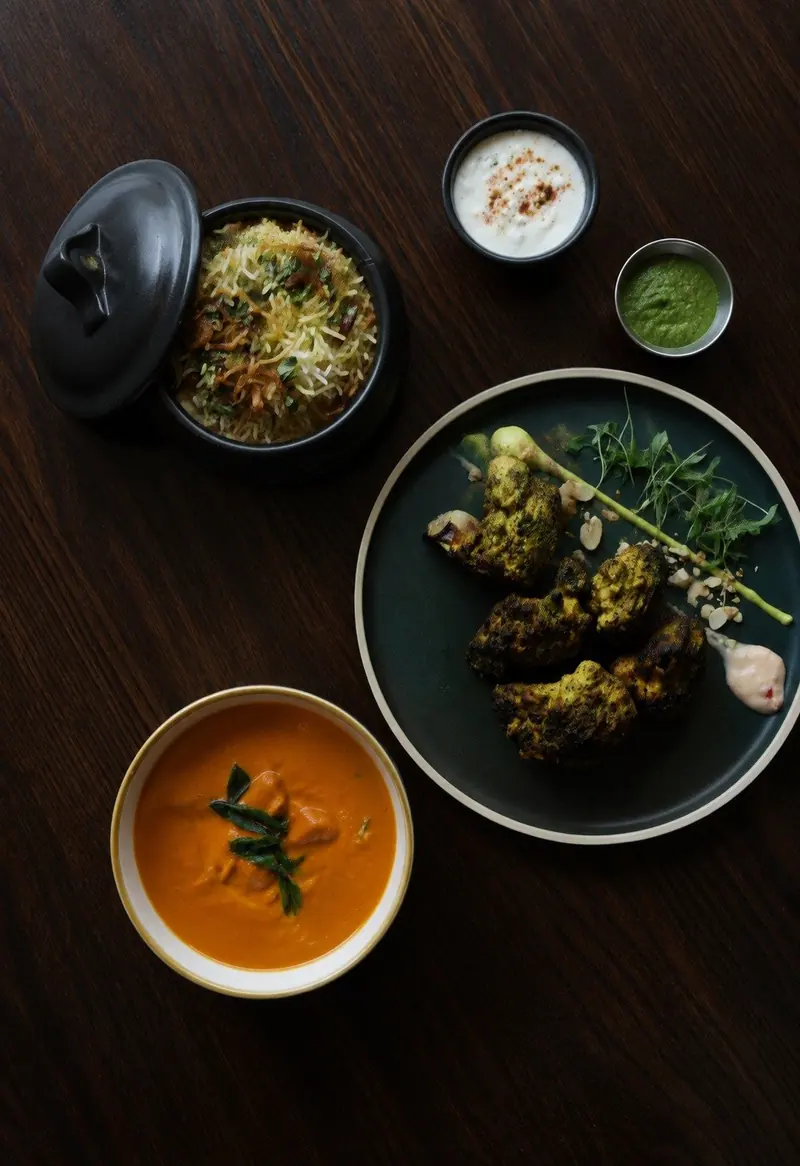
To save you time, these contain dairy according to our menu: Dal Makhani, Lasooni Palak, Paneer & Peppers Masala, Aloo Ghee Roast (as the name suggests), both vegetarian tandoor dishes (the Achari Broccoli and Malabari Paneer Tikka), the chaats with yoghurt, and our naans. Raita is yoghurt-based. Our vegetarian guide covers these dishes in detail for anyone who does eat dairy: see vegetarian Indian dining in Fulham.
How do you build a vegan Indian meal?
Think of it like a thali: several smaller dishes eaten together. A good shape for two people, once our team has confirmed the dishes:
- Start with pani puri to share. They are eaten in one bite, with the mint water poured in at the table.
- Choose two or three vegetable and lentil dishes with contrasting textures, such as smoky baingan bharta, tangy bhindi anardana and a dal.
- Add steamed rice. Ask about the Tandoori Roti and Saffron Pulao, as preparation can vary.
- Finish with a sorbet; ask what flavours are on that day and whether they are suitable.
For drinks, our mocktail list includes the Kokum Sharbat (£7), made with black mangosteen syrup, lime juice and chia seeds. Avoid the Mango Lassi, which is a yoghurt drink. Our post on traditional Indian spices is a good read if you want to understand the flavours doing the work.
Can vegans eat from the set menus?
Possibly, with some help. The weekend set lunch lists Bhindi Anardana, Baingan Bharta and Dal Tadka among its mains, and the early dinner includes Baingan Bharta. The starters on both menus are mostly dairy-based or meat, so speak to our team about what can be adapted before you choose a set menu. The tasting menu is designed as listed and includes dairy, meat and seafood.
Where can you try vegan Indian food in London?
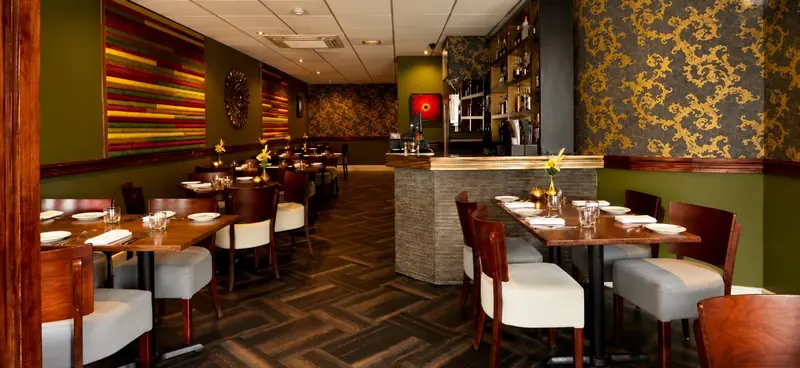
Our dining room on Fulham High Street is a good place to begin. The best approach is simple: mention that you are vegan when you book a table, then remind your server when you sit down. You can also call us on 020 7736 2521 before your visit. Directions and opening hours are on our visit page. If you are ordering for home, contact the restaurant about dietary needs before placing an online order.
Frequently asked questions
Is Indian food usually vegan?
Many Indian dishes are plant-based, but dairy is common in the form of ghee, butter, cream, yoghurt and paneer. Always ask the restaurant to confirm a dish is vegan.
Is dal vegan?
It depends on the dal. Dal makhani is traditionally made with butter and cream, so it is not vegan. A dal tadka is often plant-based, but the tempering can be done in ghee, so ask our team to confirm.
Does Pure Indian Cooking have vegan options?
Yes, we offer vegan options, and allergens are marked on every menu. Please ask our team which dishes can be prepared vegan on the day of your visit.
Is naan vegan?
Our naans are listed as containing dairy and gluten, so they are not suitable for vegans. Ask our team about other bread and rice options.
Book a table at Pure Indian Cooking
67 Fulham High Street, London SW6 3JJ · 020 7736 2521