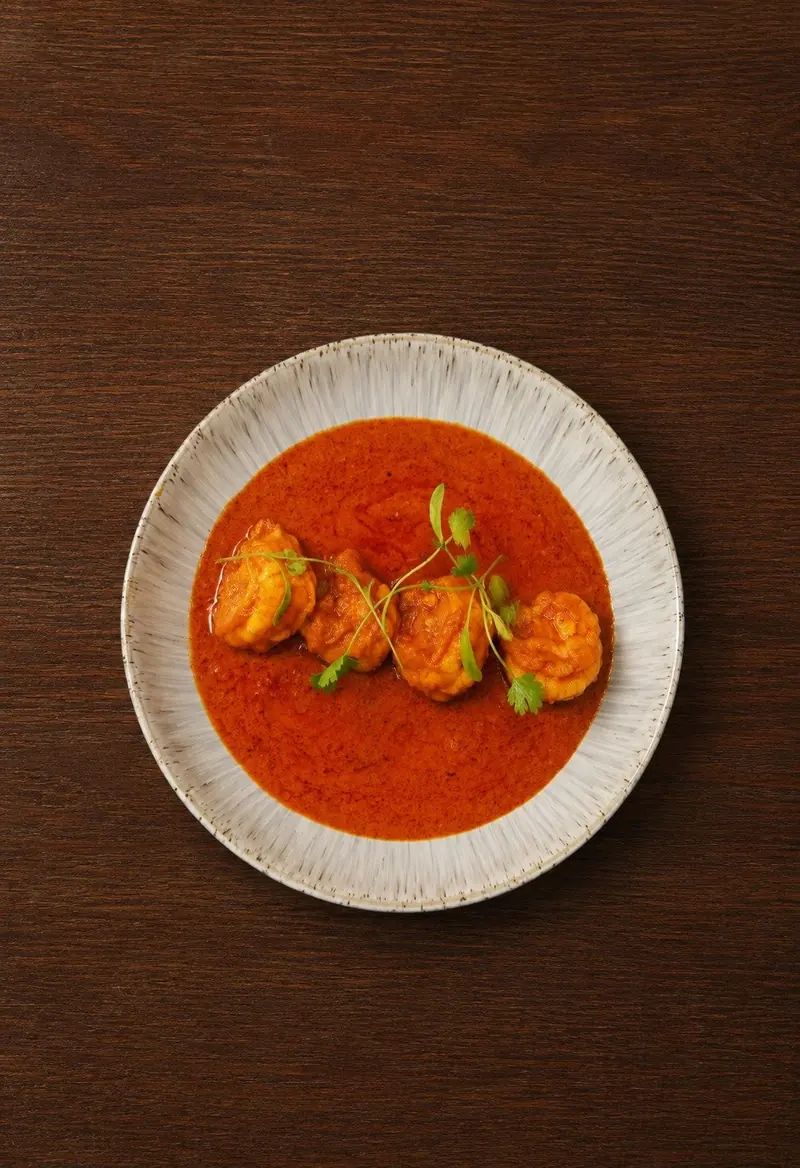
Dal Makhani is a rich Punjabi dish of whole black lentils, traditionally simmered for hours until they turn velvety, then finished with butter and often cream. If you want to try Dal Makhani in London, ours is slow cooked overnight and mildly spiced, and costs £11 on the à la carte menu at our restaurant on Fulham High Street.
At a glance
- Dal Makhani £11 à la carte: black lentils, slow cooked overnight, mildly spiced
- Also a main-course choice on our weekend set lunch (2 courses £21 / 3 courses £25)
- Served with lamb sukke as part of the £68 tasting menu
- Contains dairy (marked on the menu)
- Dal Tadka, our yellow lentil dal, is also £11
What is dal makhani?
"Dal" means lentils, or the dish made from them, and "makhani" comes from makhan, the word for butter. Put together, it describes a buttery lentil dish, though the real character comes from the lentils themselves. Dal makhani is made with whole black urad, small dark lentils with a skin that holds them together through long cooking. Many recipes also add red kidney beans (rajma) for body.
The finished dish should be thick, glossy and deep brown, with lentils that are soft but still whole. It is comforting rather than fiery. The history of dal makhani is usually traced to Punjab, and it became a fixture of North Indian restaurant menus during the twentieth century, often alongside dishes from the tandoor.
Why is dal makhani slow cooked?
Whole black urad is a sturdy lentil. Cooked briefly, it stays firm and the sauce stays thin. Given time over low heat, the lentils begin to break down at the edges and release their starch, which thickens the dish and gives it that creamy texture without needing very much cream at all.
Traditionally, dal makhani was left to simmer gently for hours, sometimes overnight on the embers of a tandoor. Long cooking also lets the flavours of tomato, ginger, garlic and spice soften and merge. That patience is the whole point of the dish, and it is why our menu describes our version simply: black lentils, slow cooked overnight, mildly spiced.
What do critics say about our Dal Makhani?
Critics have been generous about it. Harden's 2026 guide lists "the best black daal" as its top menu tip for Pure Indian Cooking. The Infatuation, in its review of the restaurant, rated our Dal Makhani among the best dals its reviewer had eaten in London.
We are proud of that, though the dish has never been about showing off. It is a reminder that some of the most rewarding cooking is also the simplest, provided you start with good ingredients and give them time.
Dal makhani vs dal tadka: what is the difference?
Both are lentil dishes, and both are £11 on our menu, but they are quite different to eat. If you are choosing between them, this comparison should help.
| Dal Makhani | Dal Tadka | |
|---|---|---|
| Lentils | Black lentils | Yellow lentils |
| Cooking | Slow cooked overnight | Finished with a hot tempering |
| Flavour on our menu | Black lentils, mildly spiced | Tomatoes, cumin and mustard seeds, curry leaves and garlic |
| Typical texture | Thick, velvety | Lighter, looser |
| Allergens marked | Dairy | None listed |
A tadka (or tempering) is the technique of frying whole spices and aromatics in hot oil or ghee and pouring them over a dish at the end, so their flavour blooms on top. Dal tadka is bright and everyday; dal makhani is slow and indulgent. Many tables order both.
What should you eat with dal makhani?
Bread is the obvious partner. Tear a Butter Naan (£3) or a Garlic Naan (£3) and use it to scoop up the dal, or try the flaky Laccha Paratha (£4). If you prefer rice, Steamed Rice (£3.50) or Saffron Pulao (£4) works well, with the dal spooned over.
Dal makhani also sits happily beside meat and fish. It is a natural match for a dish from the clay oven such as the Methi Malai Chicken Tikka (£12) or the Lamb Chops (£19), and a gentle counterpoint to something with more heat, like the Lamb Sukke (£18). It is just as good with a lamb biryani, where it adds a saucy element to the rice.
For a vegetarian meal, pair it with Bhindi Anardana (£11), Baingan Bharta (£11) or Asparagus Poriyal (£9) for colour and contrast. Our guide to the à la carte menu covers the rest of the vegetarian section.
Where else does dal makhani appear on our menus?
Beyond the à la carte, Dal Makhani is one of the main-course choices on our weekend set lunch, served on Saturday and Sunday at £21 for two courses or £25 for three. The set lunch menu calls it a restaurant speciality, which is fair.
It also appears on Chef Shilpa's tasting menu (£68 per person), where it is served alongside the lamb sukke, asparagus poriyal and naan. If you would like to know more about that experience, our guide to the Indian tasting menu explains how the evening unfolds.
Is dal makhani vegetarian?
Dal makhani is a vegetarian dish, but it is not vegan: it is traditionally made with butter and often cream, and ours is marked as containing dairy. If you are avoiding dairy, our Dal Tadka has no allergens listed on the menu, but please always tell our team about any allergies or dietary needs so they can guide you. Allergens are marked on every menu.
Come and try it
Dal makhani is best eaten warm from the kitchen, with bread to hand and a table of people to share it with. We are open every evening from 5.30pm and from 1pm on Saturdays and Sundays; you will find directions and opening hours on our visit page. To reserve, simply book a table online.
Frequently asked questions
What lentils are used in dal makhani?
Dal makhani is made with whole black lentils, known as urad, and many recipes also include red kidney beans. Our version is a traditional preparation of black lentils, slow cooked overnight.
How much is Dal Makhani at Pure Indian Cooking?
Dal Makhani is £11 on our à la carte menu. It is also a main-course option on the weekend set lunch and part of the £68 tasting menu.
Is dal makhani spicy?
Dal makhani is usually mild and creamy rather than hot. Ours is described on the menu as mildly spiced.
What is the difference between dal makhani and dal tadka?
Dal makhani uses whole black lentils cooked slowly until thick and creamy. Dal tadka uses yellow lentils finished with a tempering of spices; ours has tomatoes, cumin and mustard seeds, curry leaves and garlic.
Book a table at Pure Indian Cooking
67 Fulham High Street, London SW6 3JJ · 020 7736 2521